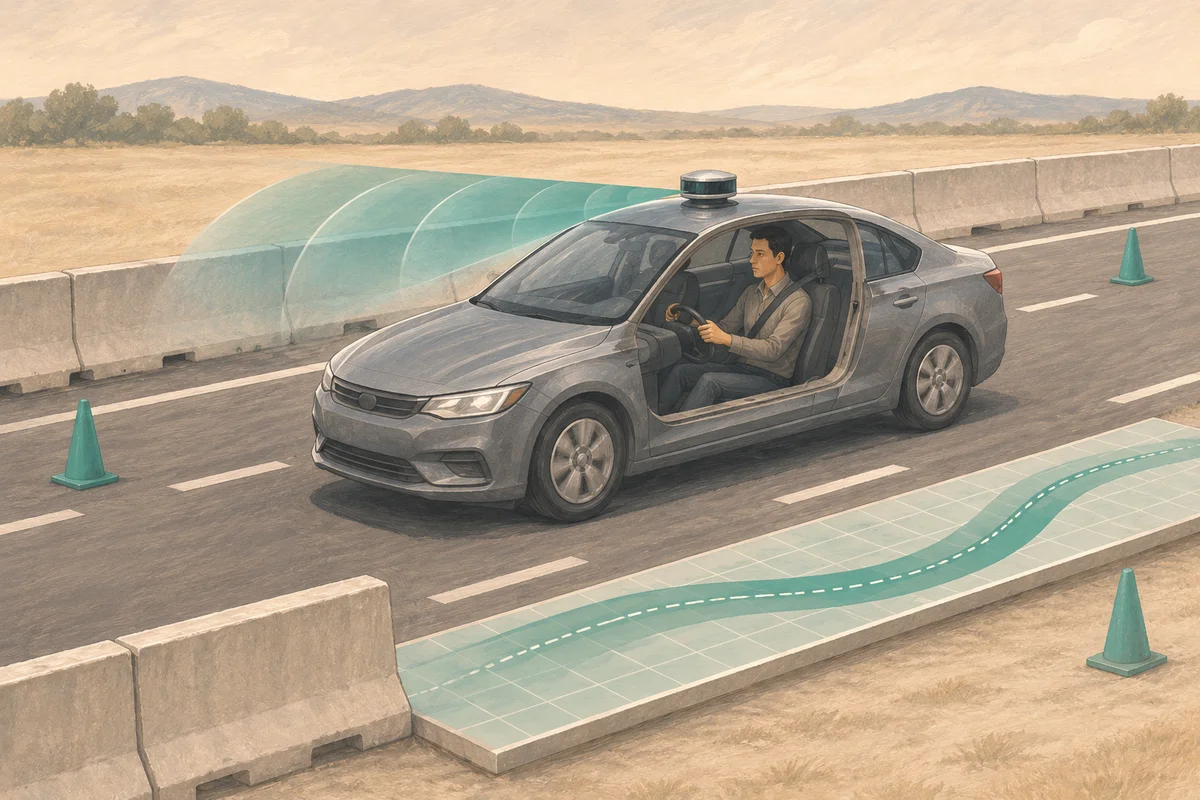
- The announcement concerns road testing and design claims, rather than verified general consumer availability.
- IT Home attributed the vehicle's sensor specifications and proposed fallback behaviour to Huawei's executive.
A road-testing announcement
Huawei executive Richard Yu described intercity highway testing of the V8 at a November 20 launch event, according to an on-site report by IT Home. The report attributes to Yu an announcement of L3 road tests at speeds of up to 120 kilometres per hour. It does not establish that customers can activate such operation on unrestricted roads.
Yu said the Ultra and Ultra+ versions use Huawei's ADS 5 driving system and a four-lidar configuration, including an 896-line sensor. The report says the vehicle has 38 sensors in total and is designed around an L3 driving architecture. These are attributed product descriptions, rather than independent validation of its driving capability.
Claims remain distinct from availability
The report also records Yu describing a proposed fallback in which the vehicle would stop safely and alert an occupant when it could not handle a situation. Those remarks describe the executive's account of intended behaviour; this report has not tested it.
The dated development is the launch-event account of the testing programme. Architecture labels, sensing specifications and the executive's confidence do not by themselves demonstrate regulatory permission or establish where any eventual customer operation would be allowed.
Sources & context
Go to the original material. Company claims remain attributed to their sources.
01