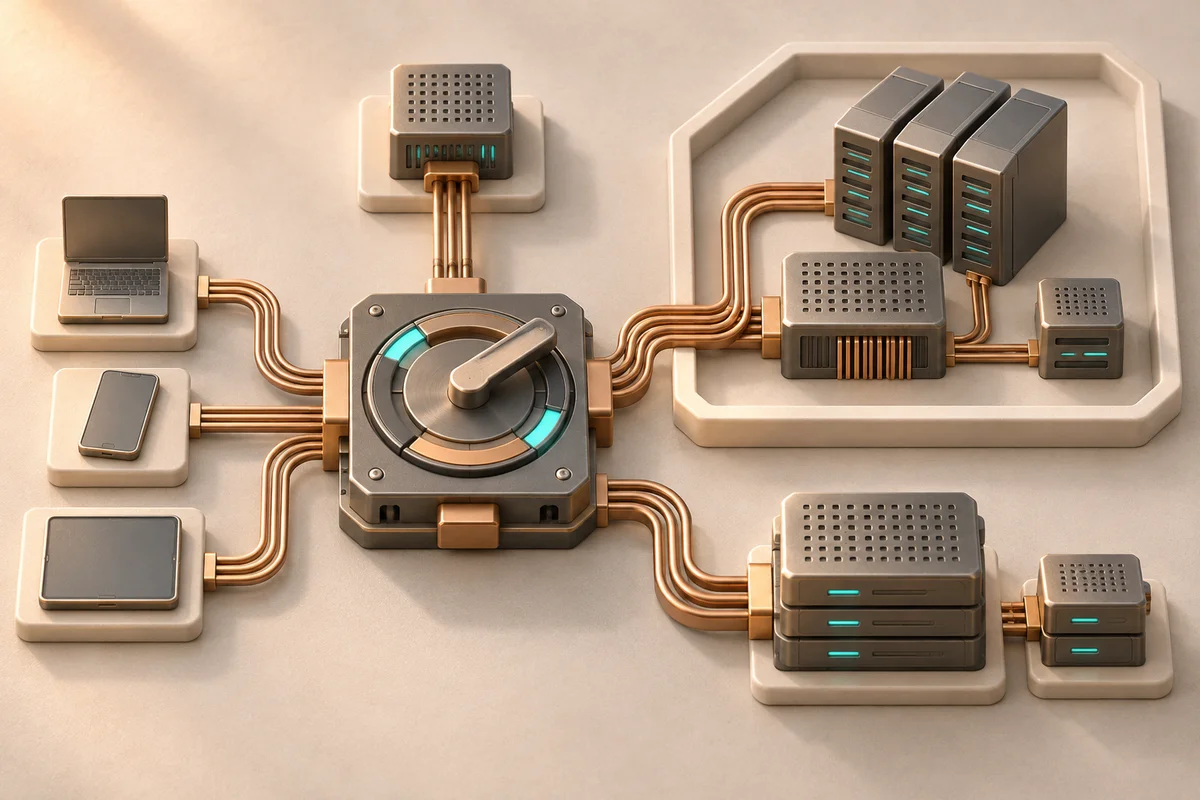
- The analysis separates Lenovo's November 10 announcement from the proposed factory's future operation.
- Private and public resources, model routing and workload requirements form the proposed hybrid approach.
A proposed supply model
A November 14 analysis by QbitAI examines how Lenovo plans to combine computing resources, model selection and enterprise workloads in its hybrid token factory approach. The report follows Lenovo's November 10 announcement and cooperation agreement with Zhangjiakou; it does not establish a new launch today.
According to the report, the first phase is planned for 2027, with a 15,000P heterogeneous computing cluster and an approximately 100MW computing center. Its projected annual capacity is 2,000 trillion tokens. These figures describe planned capacity, rather than production already achieved.
Matching resources to tasks
The analysis describes three forms of mixing: private token production with authorized public services, coordination across devices, edge infrastructure and cloud resources, and selection among open-weight and proprietary models. Lenovo's Token Engine and xCloud Token Hub are presented as mechanisms for routing workloads according to quality, latency, cost and data boundaries.
QbitAI also examines why media production and school workloads require different resource arrangements. The practical question is whether these mechanisms can deliver reliable tasks at sustainable operating cost. The report's company targets and internal cost claims have not been independently verified by China AI Wire.
Sources & context
Go to the original material. Company claims remain attributed to their sources.
01