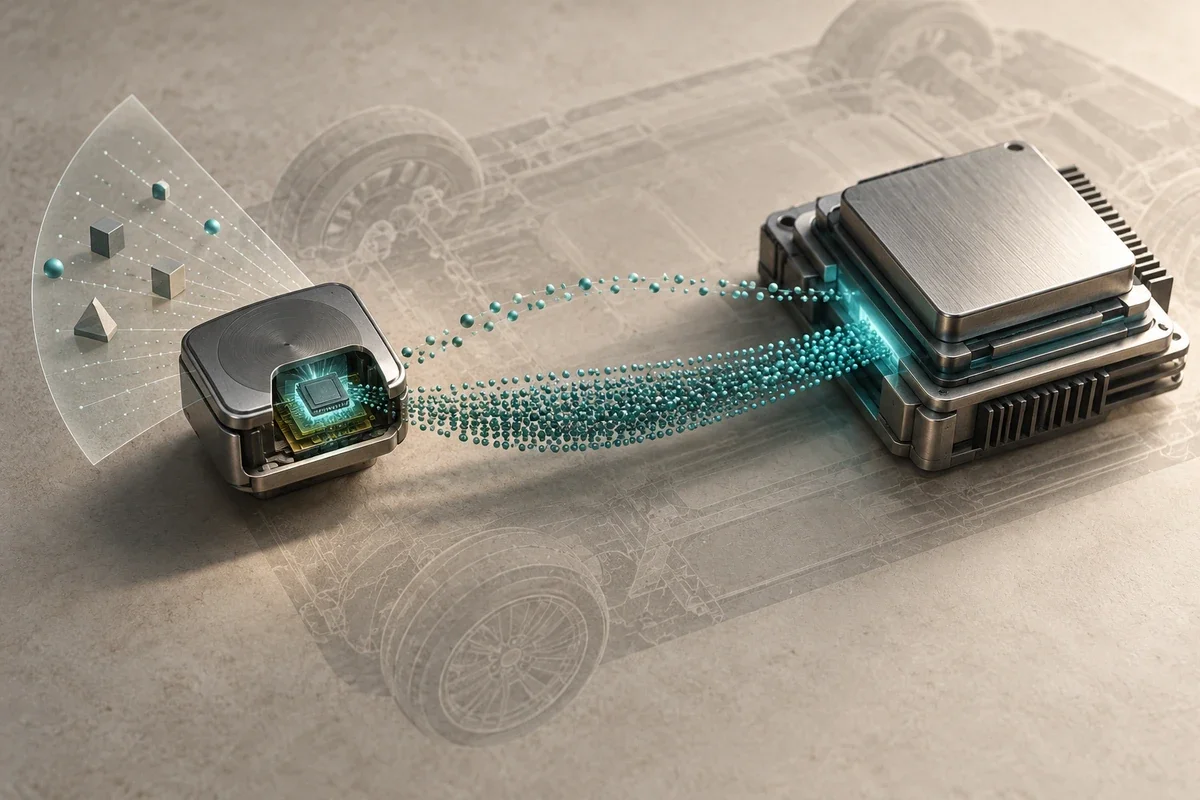
- QbitAI describes edge, satellite and combined operating modes.
- The analysis links raw data transmission to central computing capacity and bandwidth.
Dividing the workload
Qianli Technology's AI radar can process perception locally, send data to a vehicle's central computer, or do both in parallel, according to an October 27 analysis by QbitAI. The report examines the architecture of an existing product rather than announcing a launch on that date.
The radar contains a 10 TOPS neural processing unit. In edge mode, models run inside the sensor to produce structured perception results. Satellite mode prioritizes capture and transmission, leaving more processing to the central driving computer.
Engineering tradeoffs
QbitAI argues that the combined mode addresses two demands: supplying richer data for central sensor fusion while producing local results with a shorter processing chain. It describes these as parallel tasks during normal operation, alongside the potential for redundancy.
The analysis also identifies limits to central processing. Vehicles need sufficient computing capacity and high speed interfaces to use satellite architecture. It places the radar within Qianli's collaboration with model developer StepFun and automaker Geely, rather than treating the sensor as an isolated hardware upgrade.
Sources & context
Go to the original material. Company claims remain attributed to their sources.
01