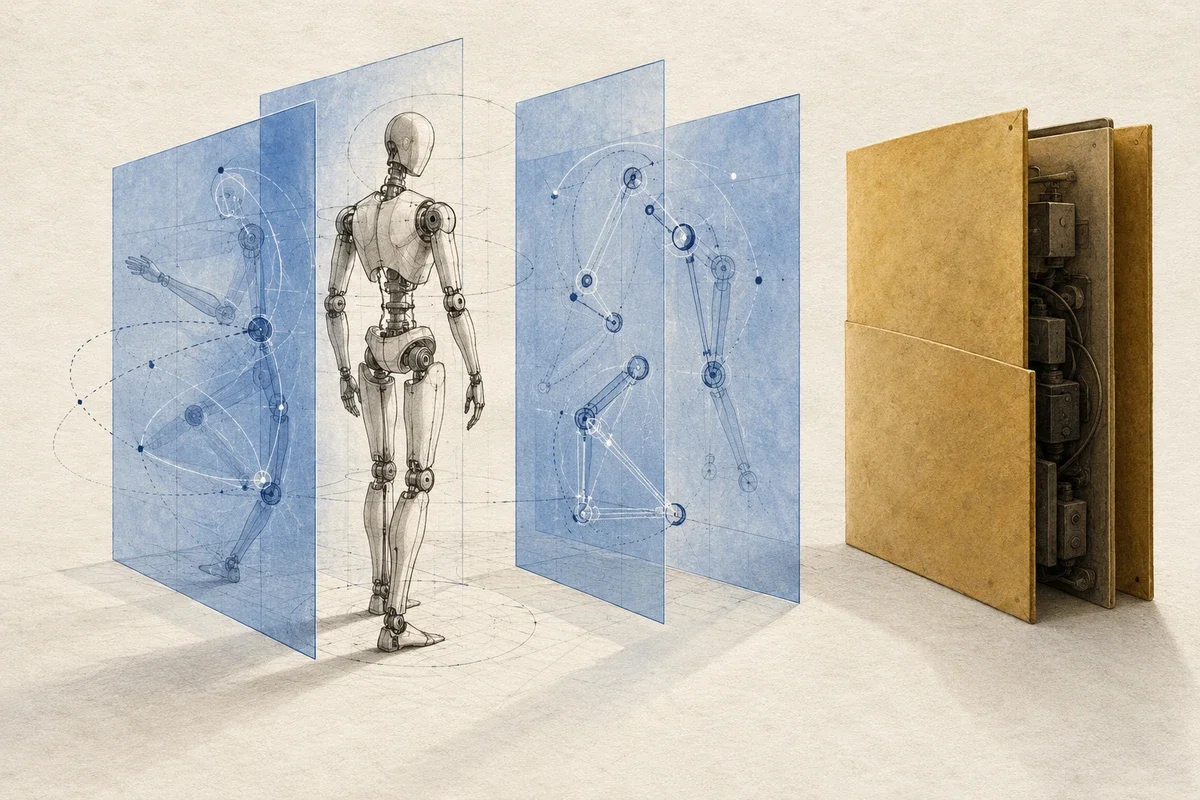
- The analysis distinguishes available simulation models from some internal engineering files.
- Higher-level intent and agent orchestration systems remain in research.
An open research platform
An October 27 QbitAI analysis examines Shanghai developer RoboParty's RP1 humanoid platform, focusing on the practical limits of its open development approach. The article discusses an existing robot and its research tools rather than establishing a new launch on that date.
QbitAI says RP1 has published URDF, MJCF and mesh resources that developers can use to inspect joints and links for simulation and motion control research. It also describes hhtools, a tool for mapping human movements onto a robot's structure before applying physical constraints.
What remains incomplete
The report draws a distinction between those resources and deeper engineering materials. Some CAD, bill of materials and circuit board manufacturing files remain internal records, it says, with the precise scope of access dependent on the project repository.
QbitAI also says portions of the basic motion control layer are open, while higher-level intent representation and agent skill orchestration remain in research. Its analysis presents maintenance, reproducibility and licensing as continuing questions for developers evaluating the platform.
Sources & context
Go to the original material. Company claims remain attributed to their sources.
01