- Wang Xingxing identifies millimeter-level precision errors between AI models and the physical world as the single most critical bottleneck for embodied AI deployment.
- Unitree proposes replacing manual robot testing workflows with an AI-autonomous closed-loop system that could scale daily testing from dozens to thousands of units.
- Wang predicts an embodied AI ChatGPT moment defined by robots completing 80% of tasks in 80% of unfamiliar scenarios, potentially arriving within several years.
- The GD01 manned mech displayed at the expo is positioned as an off-road-capable platform rather than an urban consumer product.
The Precision Gap as the Defining Challenge
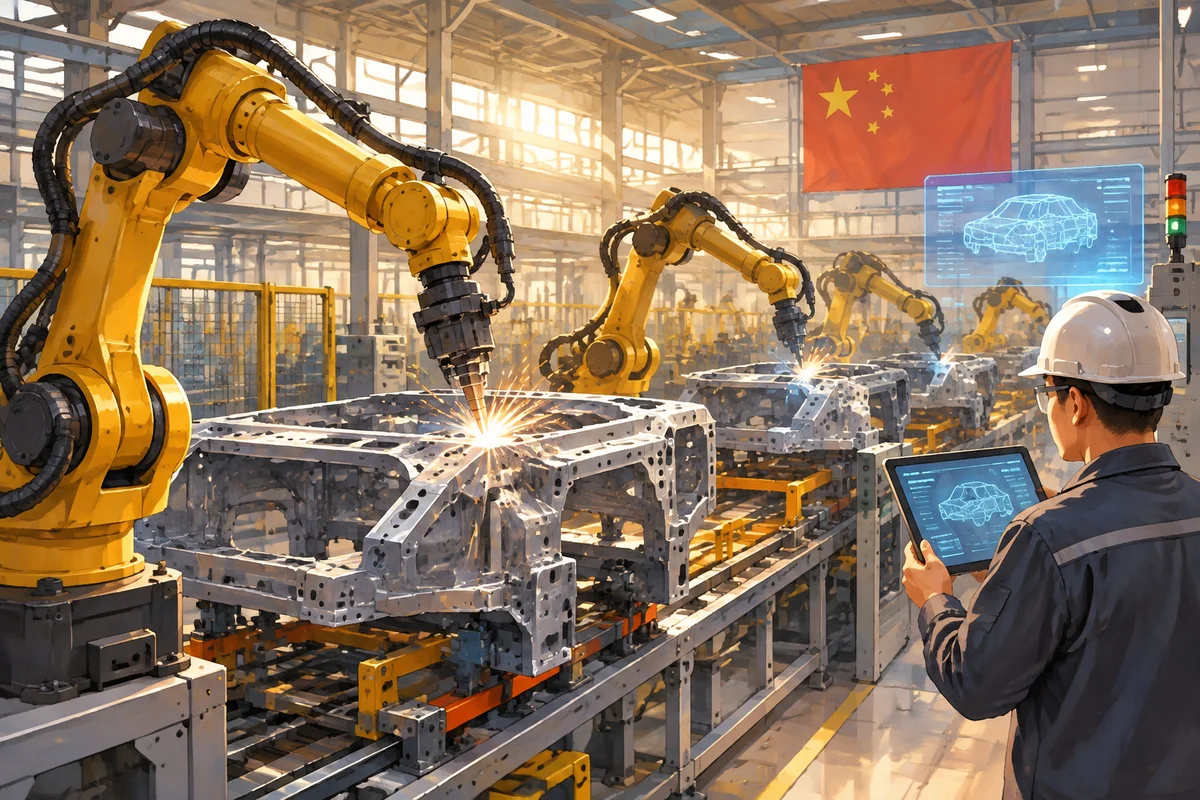
Speaking at the 5th Global Digital Trade Expo in Hangzhou on September 24, Unitree Robotics founder Wang Xingxing framed the central problem for embodied AI not as intelligence or hardware capability, but as a narrow engineering gap: the mismatch of several millimeters between what AI models command and what robots physically execute. Wang stated that whoever solves this precision problem will have effectively solved the robotics challenge entirely.
This framing departs from much industry rhetoric that emphasizes model scale or generalization benchmarks. By pinpointing sub-centimeter accuracy as the binding constraint, Wang implicitly argues that further gains in language understanding or motion planning will plateau until the physical execution layer catches up. The claim reflects Unitree's position as a company that ships hardware at scale and must contend with real-world tolerances rather than laboratory demonstrations.
An AI-Autonomous Testing Loop to Break the Data Bottleneck
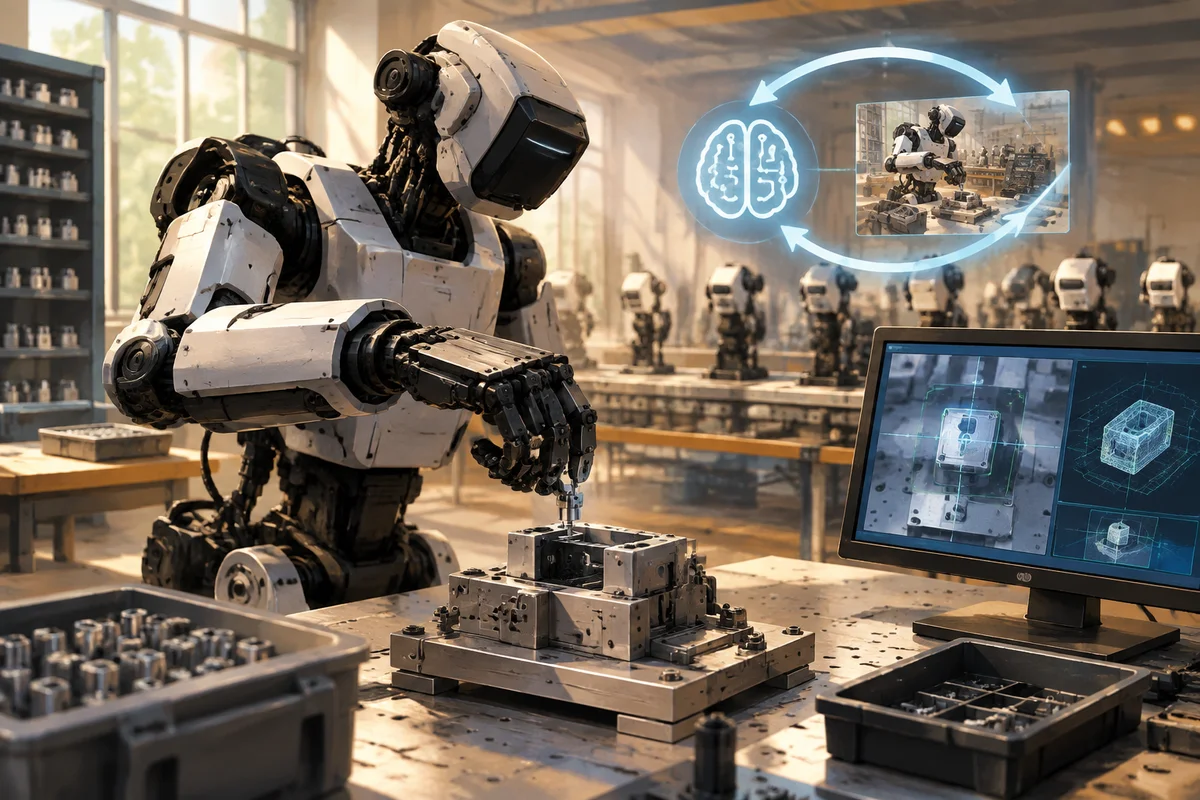
Wang identified a second structural problem: global robot development still relies heavily on manual code generation, training, deployment, testing and correction, which limits the volume of real-machine data available for improvement. He proposed replacing this human-dependent workflow with an AI-driven closed loop in which AI autonomously generates code, trains models, deploys them to physical robots, runs tests, analyzes results and iterates without human intervention at each step.
For Unitree specifically, Wang said this approach could increase daily testing capacity from dozens of robots to hundreds or thousands, constrained only by production line throughput. If realized, this would address one of the most widely acknowledged pain points in embodied AI: the scarcity of high-quality real-world interaction data compared to the abundance of internet-scale text and image corpora used to train foundation models.
Defining the Industry Inflection Point
Wang offered a concrete threshold for what he called the embodied AI sector's ChatGPT moment: when robots can complete 80% of tasks in 80% of unfamiliar environments using voice-guided embodied capabilities. He predicted this tipping point could arrive within several years, triggering a concentration of global capital and corporate resources into the sector.
This 80/80 benchmark is notably more specific than vague predictions about general-purpose robots. It also sets a bar well above current capabilities. Wang acknowledged that while robots can already follow voice commands and perform symbolic tasks, execution efficiency and reliability remain far below the threshold. He noted that the new generation of embodied AI and humanoid robotics has only been developing for three to four years and remains in its early stage, with mass consumer adoption still several years away.
GD01 and the Strategic Logic of Large-Scale Robots
The expo's most visible Unitree exhibit was the three-meter-tall GD01 manned mech, first announced in May 2026 and described as the world's first mass-produced humanoid mecha. Addressing questions about why Unitree pursues large-scale robots alongside its smaller quadruped and humanoid lines, Wang argued that large and small robots are not mutually exclusive and that large platforms represent an irreversible industry trend.
He characterized the GD01 as the robotics equivalent of an off-road vehicle, designed for complex outdoor terrain rather than urban environments. This positioning suggests Unitree views the near-term commercial value of large mechs in industrial, agricultural or emergency-response settings where traversal capability matters more than fine manipulation, rather than as direct consumer products.
Sources & context
Go to the original material. Company claims remain attributed to their sources.
01