Tencent is secretly developing a Personal Agent product codenamed 'Handy Bot' and has begun low-profile testing through a WeChat service account. Unlike traditional chatbots that respond to individual queries, Handy Bot is designed to operate persistently in the background, autonomously pursuing user-defined goals. The product is still in internal testing, with plans for a standalone app, as Tencent joins Alibaba and ByteDance in China's emerging Personal Agent category.
Kuaishou's Kling AI has announced version 4.0 of its video generation model, featuring support for 8000-token prompts, stereo audio with lip-sync, native 30-second video generation, and multi-keyframe control. The Flash version is currently available to premium members, with a full launch planned for October.
Developers discovered Moonshot AI's next-generation Kimi K3.1 model identifier in the company's API backend on September 28, revealing a 1-million-token context window and three-tier reasoning intensity levels, hinting at native agent capabilities. The model appeared callable through API probing before Moonshot's official platform posted a preview listing, signaling an imminent launch that shifts the competitive focus from conversational ability to autonomous task execution.
Xiaomi identified tool-call repetition as a significant user-experience issue following the MiMo-V2.6 release, with internal evaluations showing response-level repetition rates exceeding 0.05%. After tracing the problem to reinforcement-learning training dynamics where a per-turn flooding penalty threshold proved too permissive, the company adopted Multi-teacher On-Policy Distillation (MOPD), a targeted fix that reduced replay repetition to zero at a training cost of approximately $90,000—about 4% of the estimated MixRL alternative. Updated checkpoints have been available via Xiaomi's API since September 25, and the company announced a quota reset for all MiMo Desktop users.
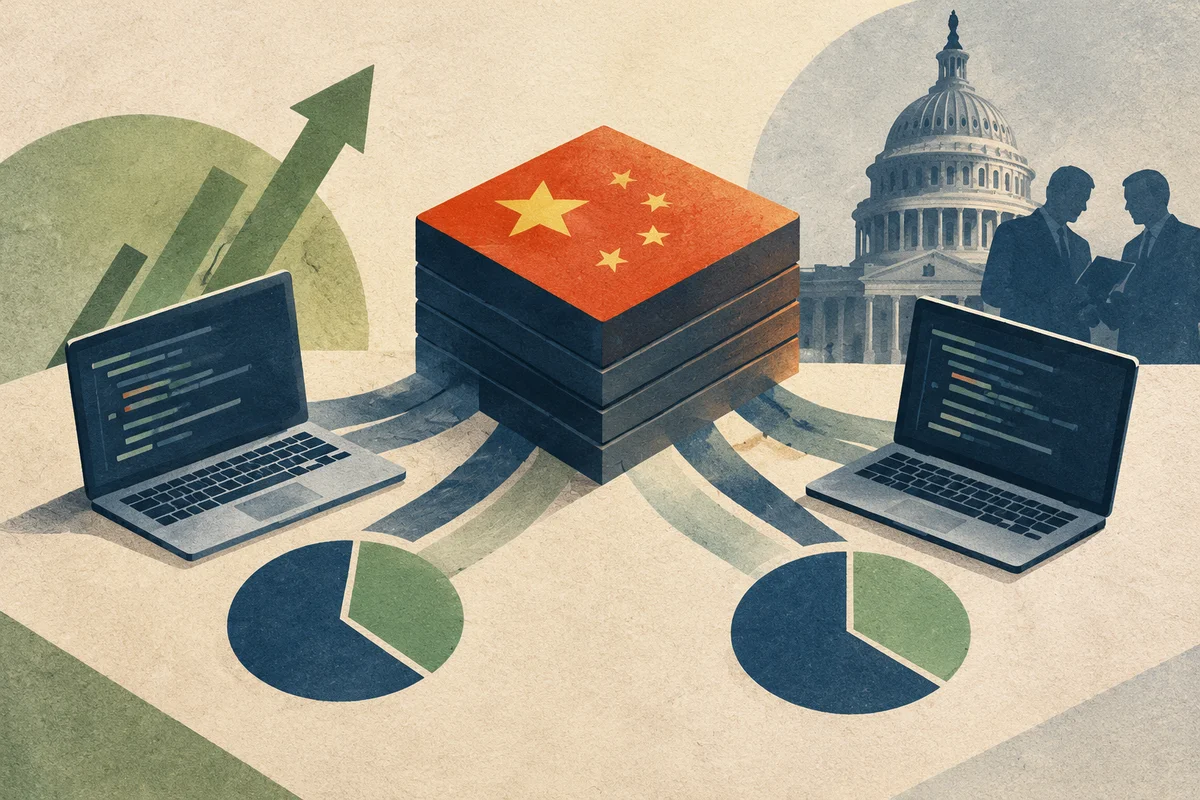
Chinese AI models now account for 57-67% of tokens on OpenRouter and 55% on Vercel, up sharply from single-digit shares earlier in 2026, driven by cost-effectiveness and improved coding capabilities. The surge is drawing scrutiny from two U.S. House committees investigating national security implications.
Ant Group's inclusionAI lab published training-content summaries for its Ling, Ring and Ming model families on Hugging Face on September 24, using the EU AI Act's public disclosure template. The documents describe training data provenance but do not include weights, datasets or any claim of regulatory certification.