- The company described a workflow from robot calibration and demonstrations to simulation and deployment.
- Its reported latency and data results are company claims from an engineering demonstration.
A workflow demonstrated in Shanghai
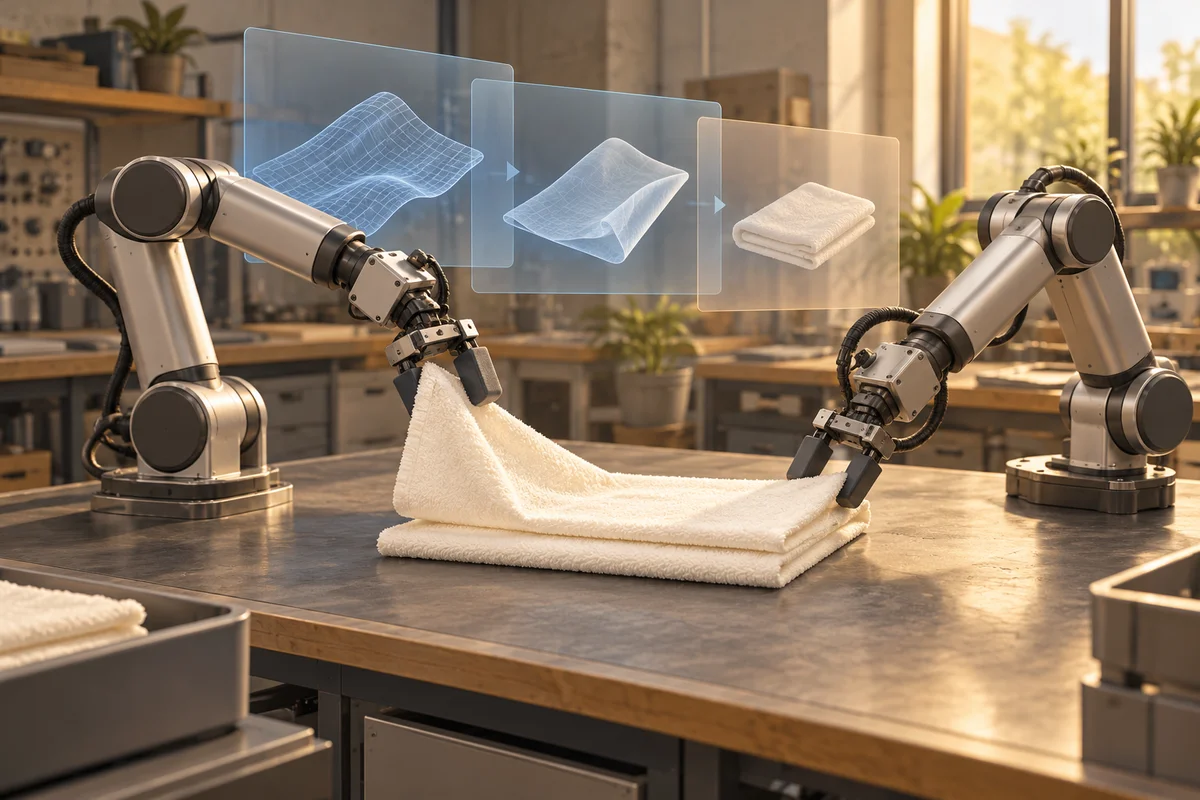
TZTEK's Suzhou robotics subsidiary described a dual-arm towel-folding system in an October 19 company report about ROSCon China 2026. The Shanghai conference ran October 16–18; product director Fan Linlin presented the work at an NVIDIA robotics workshop on October 17.
The company said its workflow covered arm calibration, teleoperated demonstrations, fine-tuning the GR00T N1.7 robot foundation model, simulation checks and deployment on its own Xingchen N10 computing unit, which uses NVIDIA Jetson Thor.
Mixed training data and edge deployment
According to the report, the team combined 100 real demonstrations with 900 simulated examples generated in Isaac Lab and used domain randomization to vary scenes. It said comparisons showed better generalization when object orientations and positions changed, but did not publish numerical success rates in the article.
The team also reported end-to-end inference latency of about 40 milliseconds after TensorRT optimization. TZTEK framed the exercise as an engineering workflow intended to transfer to other manipulation tasks; the report does not establish performance across those additional applications.
Sources & context
Go to the original material. Company claims remain attributed to their sources.
01