- Jazzyear's original reporting details real project data and constrained inference in the Guangzhou competition.
From simulation to deployment
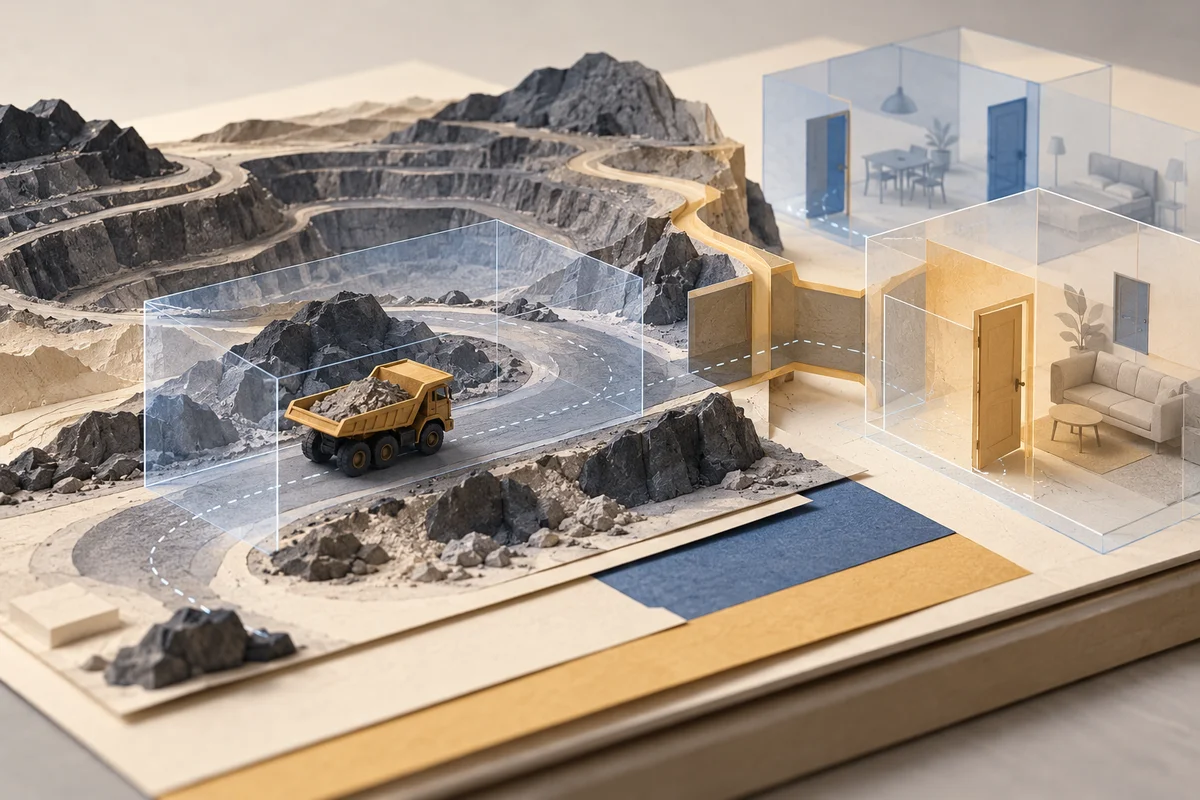
Guangzhou's Pazhou Algorithm Competition has moved its world-model competition into the final stage, with completion planned for mid-November, Jazzyear reported on October 23. Its two tracks focus on human-centered world models and intelligent-driving models for unmanned mine transport.
In original interviews, task setters described tests shaped by deployment constraints. Tage Idriver's Sun Zhijie told Jazzyear that the mine-transport competition uses simulation, but its data and evaluation standards come from real projects. Tasks assess perception as well as safety, efficiency and completion of route objectives.
A limit on inference resources
For the human-centered track, teams infer which human action caused a household scene to change between initial and final states. Each team may use only two A800 GPUs for inference, according to the report. Galaxy Waterdrop's Cao Chunshui said the aim is to balance accuracy and inference efficiency.
The report's interviews highlight how organizers are translating deployment requirements into competition rules. The finals remain a planned milestone; these descriptions do not establish that competing models have achieved reliable commercial operation.
Sources & context
Go to the original material. Company claims remain attributed to their sources.
01