- Worken combines active robot numbers, autonomous working time and an output-efficiency ratio.
- Agibot's production and revenue figures were disclosed by co-founder Peng Zhihui at the event.
Measuring work rather than installations
Agibot co-founder, president and chief technology officer Peng Zhihui introduced Worken, a measure of effective intelligent working hours, at the company's Innovation Day on October 29, The Paper reported from the event.
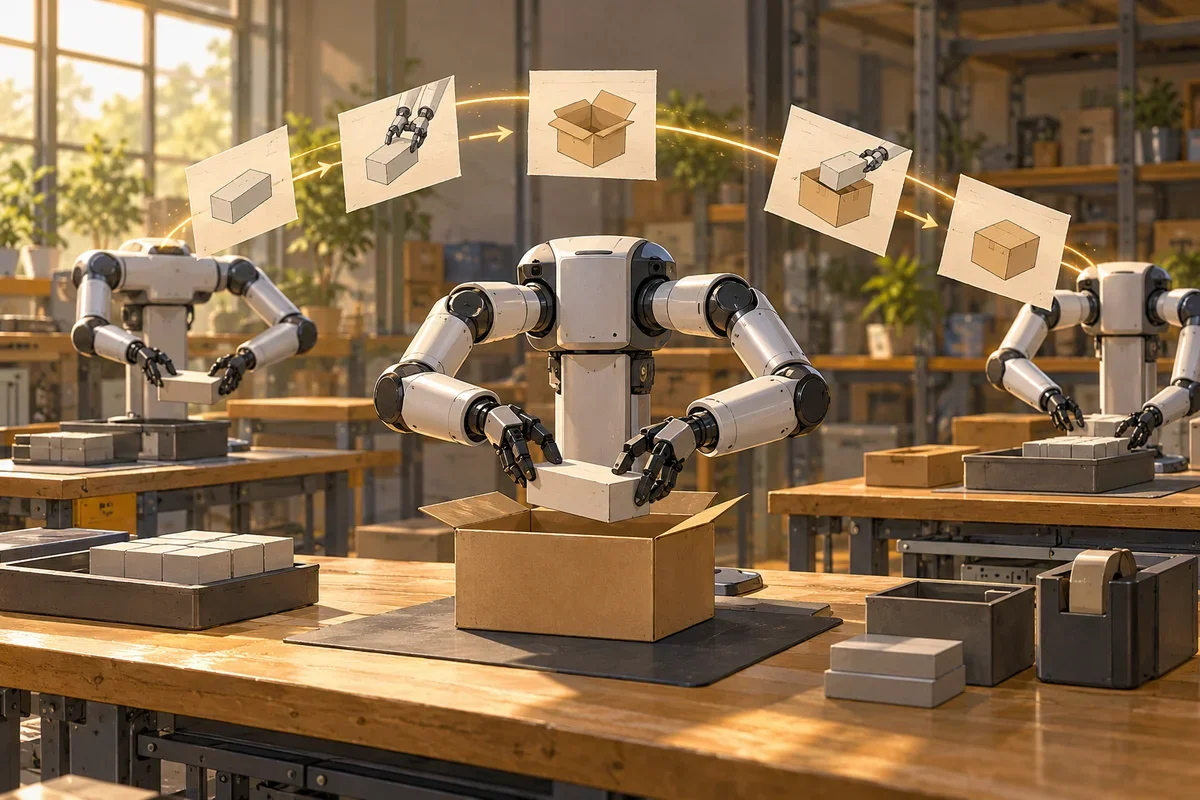
The formula multiplies the number of active robots by autonomous working time and an output-efficiency ratio. It is intended to measure actual output from autonomous robot work, rather than relying solely on the number of machines installed.
Company figures and a longer term view
The report says the metric is already being used in settings including visitor services in Chengdu, factory loading and unloading, metro security guidance and hotel services. It does not provide comparable Worken scores for those deployments.
Peng also said Agibot had produced 20,000 general-purpose AI robots in the first half of 2026 and generated nearly RMB 2 billion in revenue. These are company disclosures reported by The Paper. He outlined a longer term progression toward more general robot models and collective intelligence; the report presents that progression as his view, rather than an achieved capability.
Sources & context
Go to the original material. Company claims remain attributed to their sources.
01